
The Riberhus Puzzle: Reconstructing a Lost Castle
There is a unique kind of tension that comes with historical reconstruction. It usually happens during the greybox phase, that specific moment in Unreal Engine where you move a 3D block and realize a 450 year old map doesn't actually match the reality of the ground.
While my ultimate goal is to reconstruct the entire town of Ribe as it appeared in the 1650s, I am currently focusing on Riberhus Castle. It is one of the most iconic parts of the landscape, but as my research deepens, I realize I am not just building a model. I am trying to solve a conflict between artistic legacy and archaeological reality.
The Beautiful Lie of 1588
Take the famous Braun and Hogenberg illustration from Civitates Orbis Terrarum (1588). It is a masterpiece of Renaissance art, but it functions more like a tourist brochure than a reliable map.
The most obvious "smoking gun" is the inclusion of eleven churches and monasteries. By 1588, several of these had already been demolished following the Reformation, yet the artist kept them in to preserve the town’s prestige. When it comes to the castle, the artist "unfolded" the buildings like a pop-up book to ensure every side was visible at once. It is a beautiful arrangement, but it is physically impossible.
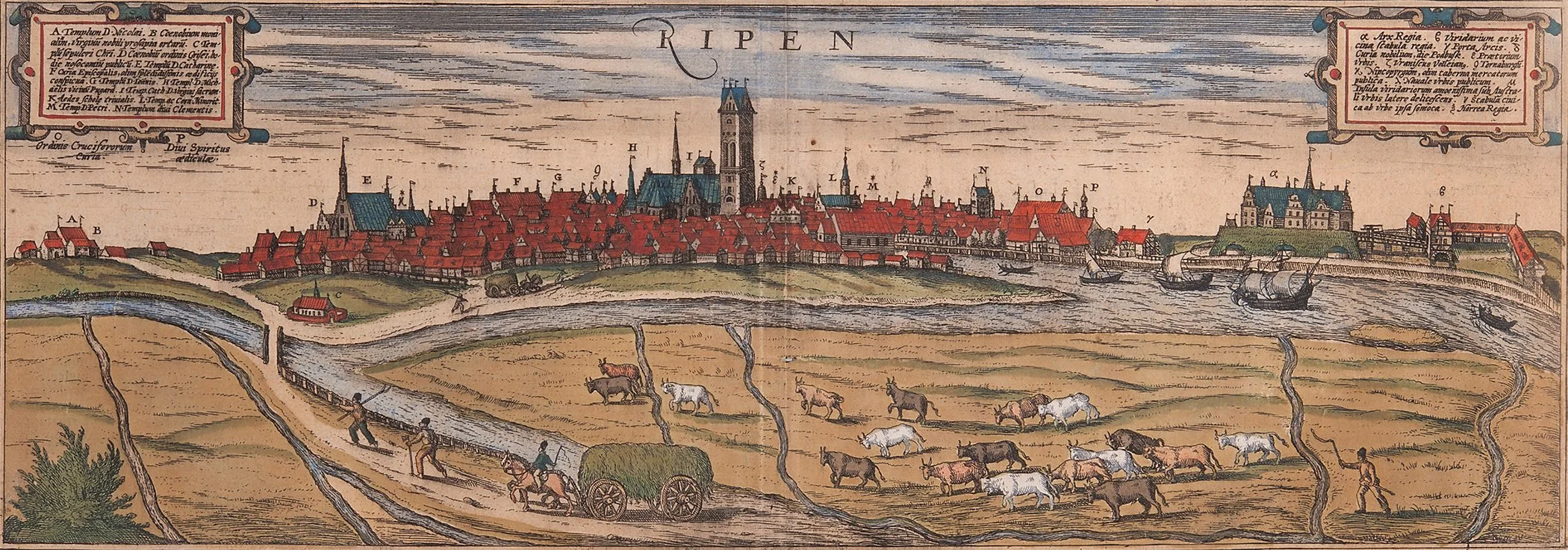
Propect of Ribe: Braun and Hogenberg illustration from Civitates Orbis Terrarum (1588)
Finding the Truth in the Dirt
On the other side of this conflict is the "Ground Truth" provided by archaeology. I reached out to Morten Søvsø, Head of Archaeology at Museum Vest, and Vivian Etting, Senior Researcher and Curator at the National Museum of Denmark.
I was fortunate that they both took the time to answer my questions and help me revise the locations of the main structures.
Vivian’s expertise in Danish castle ruins has been vital, but archaeology is often a story of fragments. While the excavations give us the "bones" of the castle, they do not provide the full silhouette. If I built strictly from the soil records, the castle would remain a series of disconnected foundations.
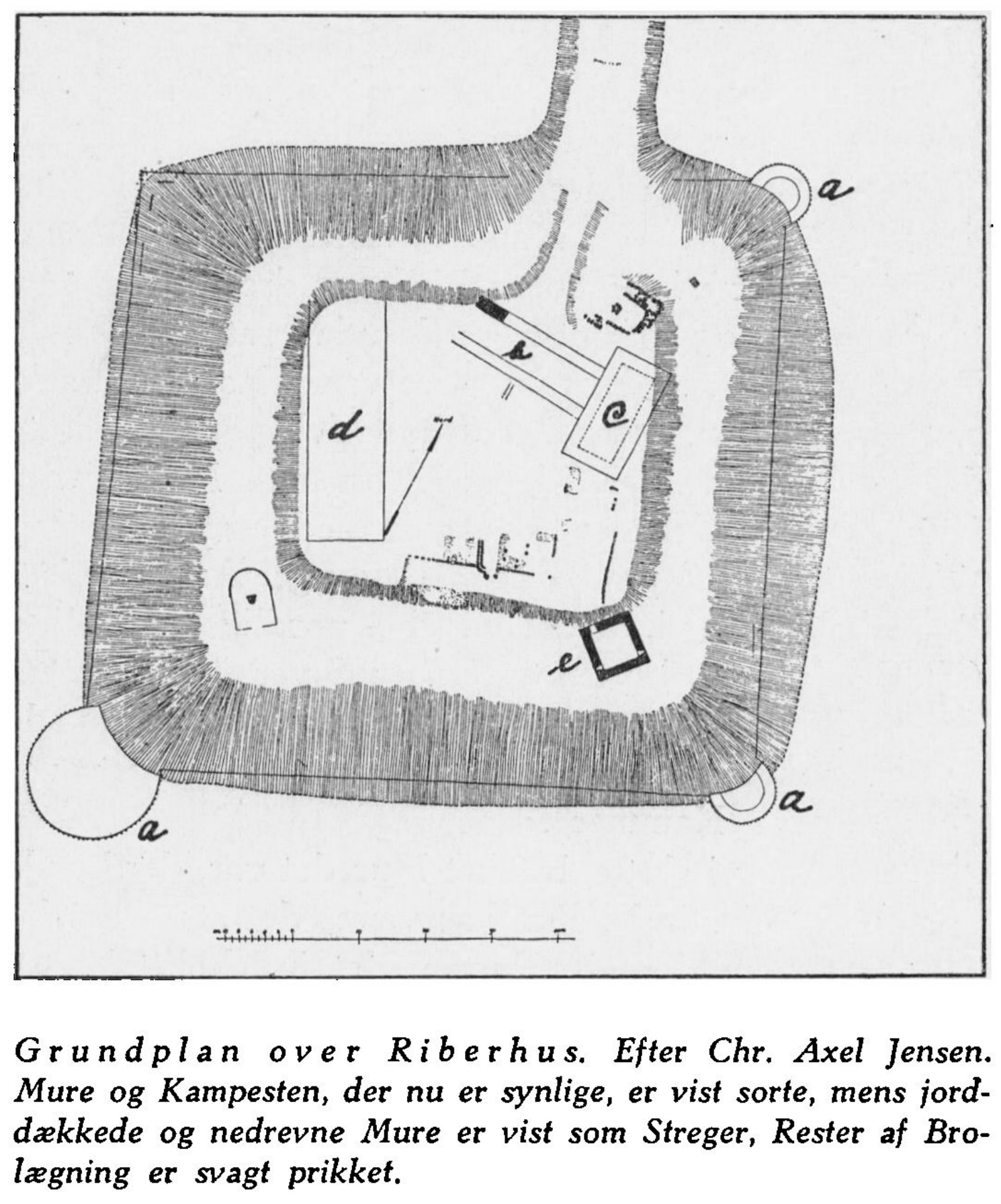
Ground plan of Riberhus.
After Chr. Axel Jensen. Walls and boulders that are currently visible are shown in black, while earth-covered and demolished walls are shown as lines. Remains of paving are faintly dotted.
Bridging Gaps with Architectural DNA
To fill these silences, I look for "Architectural Cousins." Since I am not finished with the research yet, I am studying surviving Renaissance structures like Rosenborg, Frederiksborg and also smaller castles like Broholm Slot. I am particularly interested in the brickwork and the Volute Gables, those elegant, rounded edges that define the Dutch Renaissance style favored by the Danish crown.
I am not looking for a mirror image of Riberhus, but for its DNA. By studying how these surviving "siblings" were built, I can start to piece together the missing parts. The footprint comes from the dirt, the silhouette comes from the old masters, and the fine details come from surviving history.
The Modern Archive: Books and NotebookLM
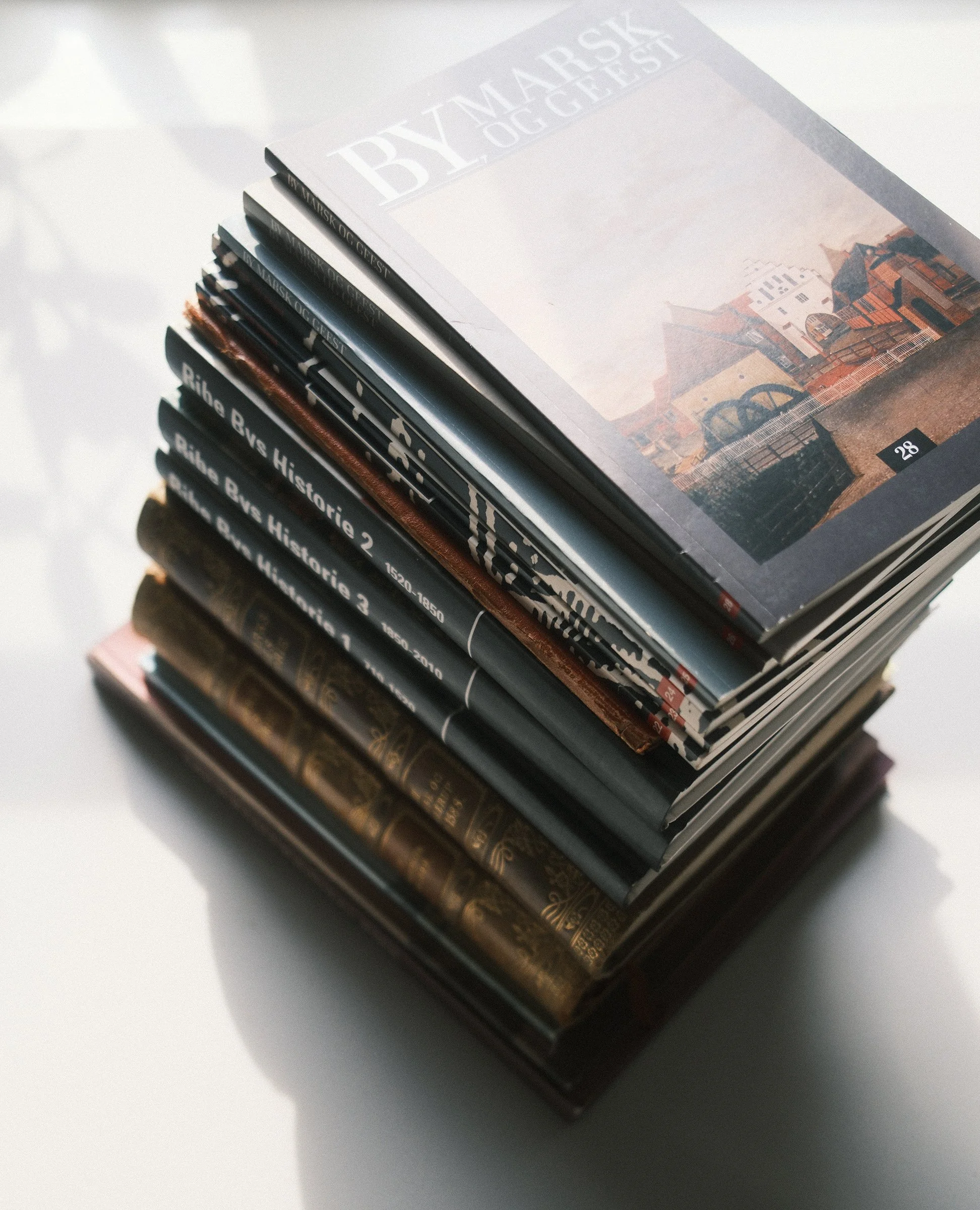
The research for this project has resulted in a mountain of information.
My desk is currently covered in physical books on Danish fortification and historical architecture, while my hard drive is filled with hundreds of pages of archaeological reports.
To manage this massive amount of data, I have been using Google NotebookLM.
By adding my library of PDFs into the tool, I can quickly cross reference facts or find specific mentions of building materials across dozens of different sources at once.
It has become a vital digital assistant, helping me find the "needle in the haystack" when I am stuck on a specific architectural detail.
Greyboxing a Ghost
Right now, the castle exists as a collection of grey boxes in Unreal Engine. But this phase is where the real detective work happens. When I place a wall in 3D, the physics of the landscape force a decision. If a building is too large, it simply won't fit on the archaeological footprint confirmed by the experts.
I am striving for the "Ground Truth," but I recognize the value of the "Romanticized Truth." In the end, my version of Riberhus will be a believable ghost, a marriage between the messy reality of the soil and the grand vision of the Renaissance.
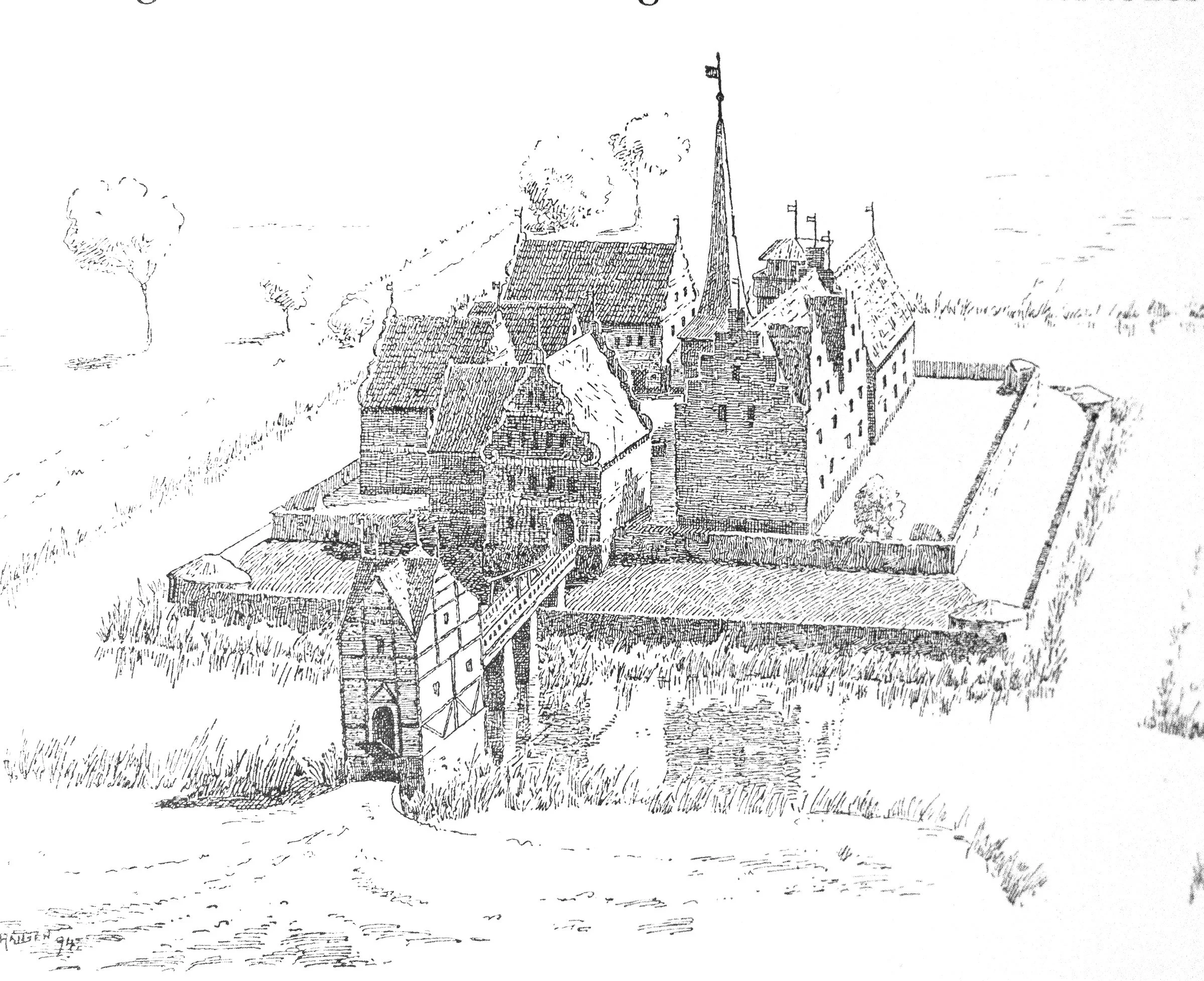
Drawing of Riberhus by J. Th. Hansen, from the book Danmarks riges historie Vol. 3