
Jagten på fast grund
Nogle beslutninger i spiludvikling handler i virkeligheden ikke om design.
De handler om at vælge mellem det, du holder af, og det, du reelt kan dokumentere.
Lige fra starten har jeg gerne ville bygge mere end bare et spil.
Jeg vil skabe en troværdig verden, som kan eksistere i sig selv, også selvom der ikke er en spiller til at iagttage den.
Det betyder, at jeg må starte med simulationen: miljøet, arkitekturen og logikken i dagligdagen.
Selve "spillet" kommer først bagefter.
Jeg har altid været dybt fascineret af middelalderen.
Der er noget ved den periode, der føles råt og visuelt betagende.
Men jo dybere jeg gravede, jo mere stødte jeg på et problem: usikkerheden, ikke min egen, men arkæologisk og historisk.
Vi ved en masse om middelalderen i de store træk, men når man zoomer ind, bliver det hele sløret.
En enorm del er fortolkning. Og hvis mit mål er at bygge noget troværdigt, begynder det gætteværk at modarbejde mig.
Derfor flytter jeg tidsperioden frem til midten af 1600-tallet.
Det er en tid, hvor historien bliver lidt mere håndgribelig.
Vi har bedre optegnelser, bevarede bygninger og skriftlige kilder, der viser, hvordan byerne reelt fungerede.
Det giver mig et solidt fundament at bygge videre på.
Det var en tid med enorme spændinger. Magtforskydninger, ændrede handelsruter og "de gamle dyder", der begyndte at krakelere.
Det var et pres, folk mærkede på egen krop.
Hekseprocesserne i Ribe var ikke bare isolerede begivenheder; de var symptomer på et samfund under ekstremt pres.
Overtro, religion og personlige konflikter stødte sammen og fik naboer til at vende sig mod hinanden.
For mig er det ikke bare historie. Det er et fascinerende indblik i menneskelig adfærd.
Så selvom jeg må opgive middelalderen, som jeg elsker, kan jeg til gengæld skabe en verden, jeg faktisk kan forankre i virkeligheden.
Det gør forhåbentlig den samlede oplevelse langt mere indlevende til sidst.
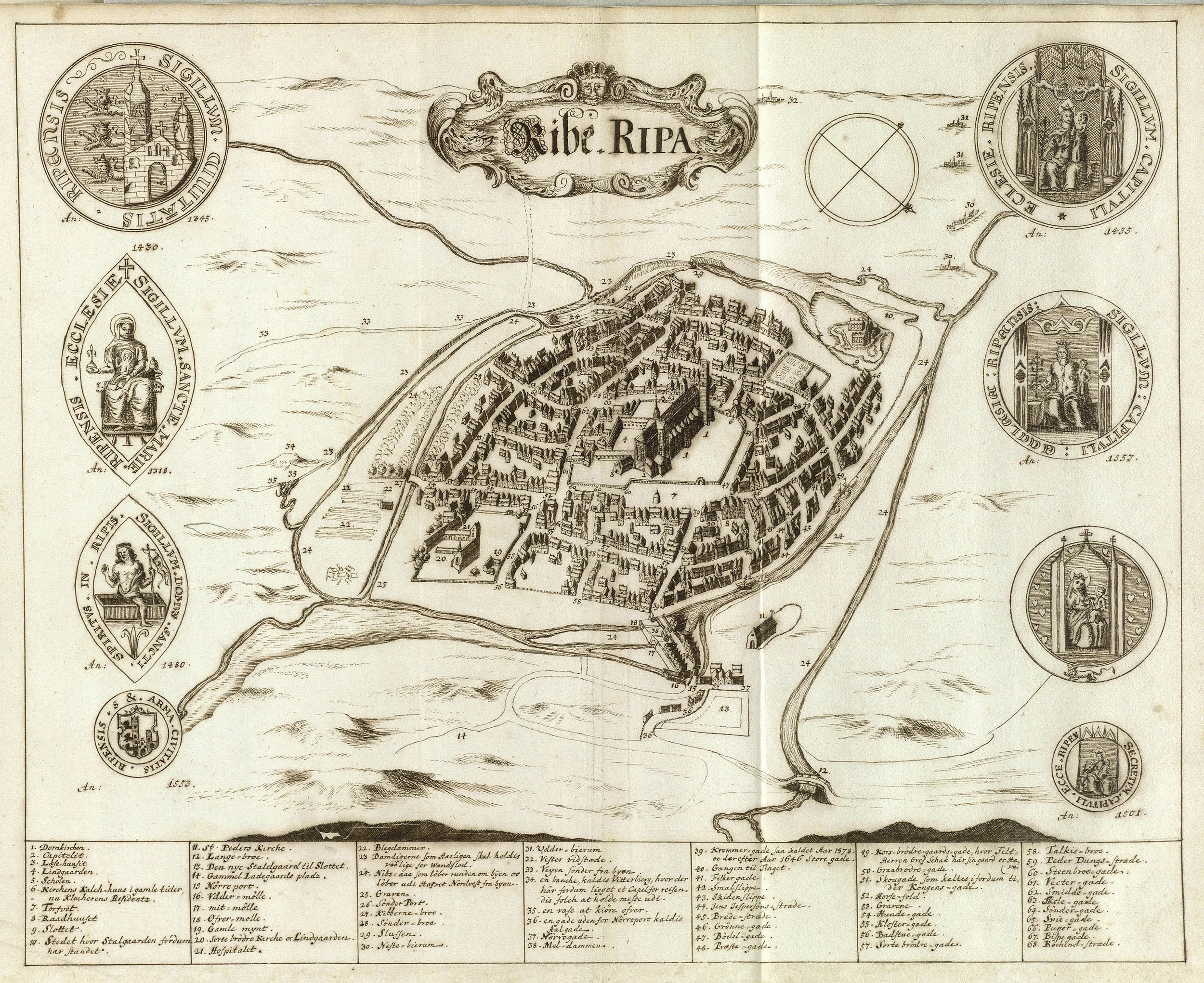
Dette kort fra Resens Atlas Danicus er en af de vigtigste grundsten i min research. Ved at tilpasse det historiske perspektiv til moderne GIS-data sikrer jeg, at den "digitale skygge" af Ribe bliver opbygget på et fundament af autentisk 1600-tals kartografi.